Radon in Tight Homes: Why Fresh-Air Ventilation Matters
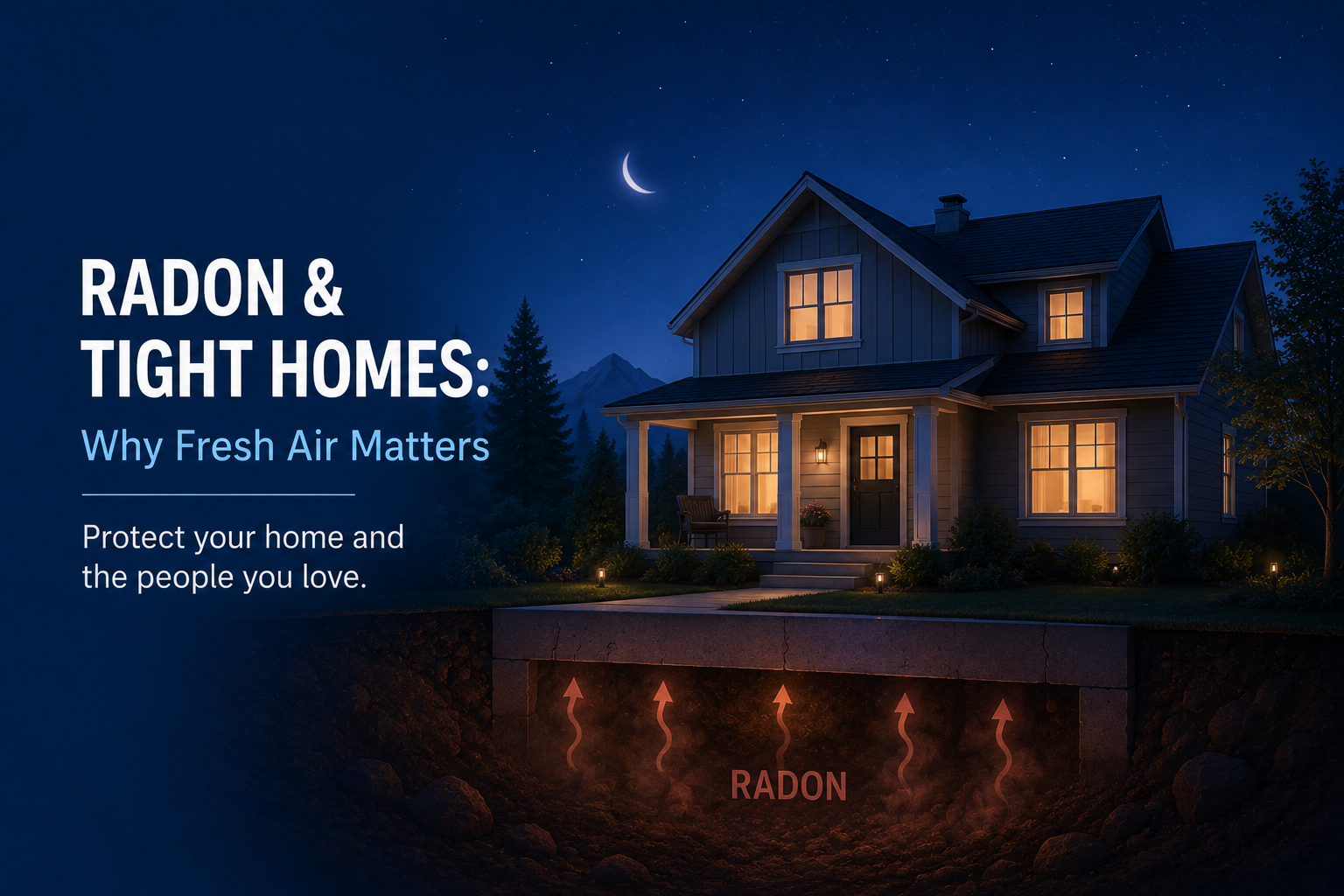
Radon in Tight Homes: The Modern Indoor Air Challenge
Homes have become dramatically tighter. Better insulation, sealed windows, and improved weatherstripping help reduce energy waste—and that's a good thing! But without enough ventilation, indoor air pollutants can accumulate more easily.
Hi, I’m LuLu! As UpgradeAirKit’s resident fresh-air enthusiast, I’m here to walk you through one pollutant you definitely don't want hanging around your home: radon. We'll look at what it is, why tight homes deserve special attention, and where balanced fresh-air ventilation fits into the picture.
Radon is a colorless, odorless radioactive gas that comes naturally from soil and rock beneath homes. According to the EPA, radon is the second leading cause of lung cancer in the United States after smoking. You can't see it, smell it, or taste it—which is why testing is so important.
Why Tight Homes Can Trap Radon
Radon can enter homes through cracks in foundations and basement floors, gaps around pipes and utilities, sump openings, porous concrete, and other areas where the home contacts the soil.
Older, leakier homes often have more uncontrolled air exchange through gaps and cracks. Modern homes are intentionally built or upgraded to reduce those leaks. That's great for comfort and efficiency, but it means we need to think intentionally about ventilation. Without enough fresh-air exchange, indoor pollutants can linger and accumulate.
As I like to say: build tight, but don't forget to ventilate right!
The Radon Testing Reality
The EPA recommends that homes be tested for radon. Testing is the only way to know your home's radon level. If your home tests at or above 4 picocuries per liter (pCi/L)—the EPA's recommended action level—you should take steps to reduce it. A qualified radon mitigation professional can help determine the appropriate solution for your home.
Important note from LuLu: Fresh-air ventilation systems like ERVs can help dilute indoor pollutants and support overall indoor air quality, but they are not a substitute for dedicated radon mitigation. If elevated radon is found, proven mitigation methods such as active soil depressurization are designed to address radon before it enters the living space.
How Balanced Fresh-Air Ventilation Helps
An Energy Recovery Ventilator (ERV) continuously exchanges stale indoor air for filtered outdoor air while transferring some heat and moisture between the outgoing and incoming air streams.
A balanced fresh-air system supplies and exhausts similar amounts of air, providing controlled ventilation without relying on random leaks in the home. This continuous air exchange helps dilute indoor pollutants rather than allowing stale air to simply sit inside.
Radon Dilution & Pressure Balance
Continuous ventilation replaces a portion of the home's indoor air with outdoor air throughout the day, which can help dilute indoor pollutants, including radon. A properly designed balanced system also helps avoid unnecessary pressure imbalances created by the ventilation system itself.
However, the effect on radon varies from home to home. An ERV should never be considered a replacement for dedicated radon mitigation when elevated levels have been identified.
Energy Efficiency Without Compromise
Here's the challenge: we've worked hard to make our homes tighter and more energy efficient, but we still need fresh air. Relying on open windows isn't practical year-round—especially when it's freezing, smoky, humid, or allergy season is in full swing.
An ERV provides controlled fresh-air ventilation while transferring some energy between the outgoing and incoming air streams, reducing the heating or cooling penalty associated with ventilation.
Fresh air without throwing all that conditioned air out the window? That's much more my style. 🌹
Radon Mitigation + Fresh-Air Ventilation
For a tight home in a radon-prone area, think of radon control and whole-home ventilation as two different jobs that work together:
- Test for radon. If levels are elevated, take appropriate action and consider working with a qualified radon mitigation professional.
- Provide balanced fresh-air ventilation. An ERV or HRV provides controlled air exchange, helping dilute everyday indoor pollutants and supporting healthier indoor air.
Radon mitigation addresses a specific source of risk. Fresh-air ventilation addresses the broader need for continuous indoor air exchange.
Is Your Home at Risk?
Radon risk varies by geography and even from house to house. Some areas have higher predicted radon potential, but elevated radon can occur anywhere. Your neighbor's test results can't tell you what's happening inside your home—the only way to know is to test.
If your home is tightly sealed, located in an area with elevated radon potential, or has signs of inadequate ventilation such as stuffiness, lingering odors, or moisture issues, testing for radon and evaluating your home's ventilation are smart steps.
Fresh Air as Part of Healthy Home Design
Tight homes are more comfortable and energy efficient, but they also need intentional ventilation. Radon is one indoor-air concern; others include CO2 buildup, moisture, odors, VOCs, and other pollutants generated by everyday life.
A balanced fresh-air system like UpgradeAirKit is designed to help tight and modern homes get continuous, energy-efficient fresh air. Combined with radon testing and, when necessary, dedicated radon mitigation, balanced ventilation can be an important part of creating a healthier indoor environment.
After all, your home may be built tight—but the air inside shouldn't feel trapped.
Size it with the ERV sizing CFM table or request free ERV system sizing from our team. Not sure which fresh-air system is right for your home? Use our Free System Match tool to explore options based on your home's size and fresh-air needs.
Frequently Asked Questions
Can an ERV replace radon mitigation?
No. An ERV can help dilute indoor pollutants, but it is not a substitute for dedicated radon mitigation. If testing shows elevated radon, take appropriate action and consider consulting a qualified radon mitigation professional.
How does an ERV help in a home with radon concerns?
An ERV continuously exchanges a portion of stale indoor air for fresh outdoor air, helping dilute indoor pollutants while providing balanced ventilation. These are valuable indoor-air-quality benefits, but an ERV should complement—not replace—radon mitigation when elevated levels are present.
Should I test my home for radon before installing an ERV?
Radon testing is a good idea regardless of whether you're considering an ERV. Testing is the only way to know your home's radon concentration. If elevated levels are found, address the radon appropriately; balanced fresh-air ventilation can then complement those efforts by helping manage the broader range of pollutants that accumulate inside a tight home.
Build tight. Ventilate right. Breathe fresh. 🌹
Authored by LuLu & the UpgradeAirKit Team